



Characterization data plays a key role in refining marketing strategy. However, this data is not always available, which is where Open Data comes in. Build a lasting relationship with a good knowledge of the customer thanks to the customer profile Knowing the customer profile is a key element to define your marketing and CRM strategy. Indeed, the more finely we know our customers, the more we are able to build a lasting relationship with them. This will allow you to adjust your offers according to the different customers, to personalize your approach and thus to meet the needs and expectations of the individuals concerned. As a general rule, profiling is based primarily on the brand’s own data. We can thus use customer characterization data (date of birth, place of residence…), data related to his consumption (products consumed or not, frequency of purchase…) or relational data (email opening, visit to the site…). Role of characterization data Characterization data has a key role in customer profiling, as it allows to better understand who the customer is, what he consumes and how he interacts with the brand. A good use of this data will allow a brand to better communicate with the customer, to be closer to his interests and therefore to increase the engagement of the latter because it is chosen according to the customer profile. This data will also improve the feeling of belonging to a brand community for the customer. Customer profile data often incorrectly entered Nevertheless, many databases are poor in characterization data. There are many reasons for this. In the banking/insurance sector, the level of collection of this type of data is often more important than in other sectors, but with a freshness of information that often depends on the first account opened. Companies that have developed a loyalty program have often collected a greater amount of data… when the customer decides to give it to them. Finally, many pure players, who want to improve their conversion tunnel, have limited the collection of characterization data to a strict minimum. The richness of Open Data However, there are solutions to get around these problems of quality and/or missing data. Indeed, beyond the solutions of data enrichment via megabases, open data offers a real opportunity to improve customer knowledge. In France, the systems put in place by the government (INSEE, data.gouv.fr) have made it possible to collect a large amount of data at a fairly fine level of granularity. In particular, the creation of the IRIS concept (Ilôt Regroupé pour l’Information Statistique) at the end of the 1990s made it possible to group data on a geographical level equivalent to the neighborhood. We thus find a large amount of information on different themes: population structure, household composition, distribution by age, level of education, employment, travel, equipment, income level, etc. The strength of the IRIS is that they have been constituted while respecting administrative and geographic boundaries and ensuring that the types of housing in the neighborhood are homogeneous. As a result, there is a homogeneity of consumer profiles within the same IRIS. How does datacadabra support you on the subject? In datacadabra, the Describe module allows you to create profiles of your customers using Open Data. Indeed, Géotypo, our segmentation of French neighborhoods, groups all IRIS into 6 families and 23 segments. It allows you to characterize your customers by comparing them to the overall structure of the population. This will allow you to understand the over- and under-representation of your customers’ sociodemographic profiles and therefore to improve your communication. In addition, datacadabra also allows you to compare different groups in your customer file. Geotypo offers many benefits. Improve your communication, identify the profiles to be recruited in priority, enrich your database… In short, many subjects that will allow you to improve your performance. Want to know more? Do not hesitate to contact us or to ask for a demo of datacadabra.
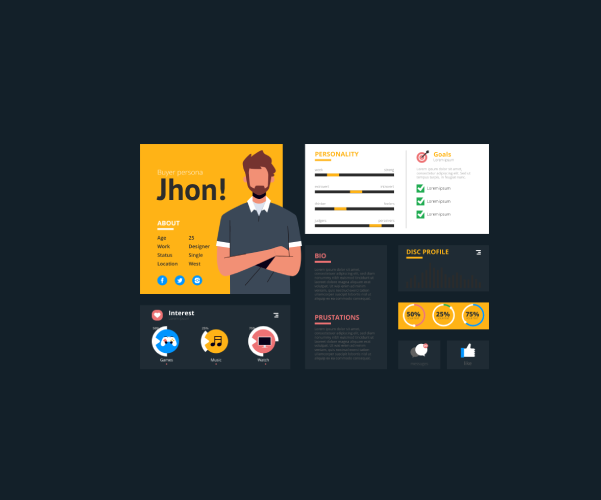
Customization has become a must in marketing strategy. One of the first steps is to identify your personas in order to adapt your communication. Customization at the core of the marketing strategy When implementing customization actions in your marketing strategy, you must first improve your understanding of your different targets. In this case, the creation of personas can be of great interest. From a statistical point of view, typology will play an important role in this process. What is a persona? The main interest of the typology is that it will allow you to create personas representative of your customer groups. Indeed, in marketing, a persona is often defined as a fictitious person representing the group to which he belongs. The persona is endowed with characteristics specific to its group, whether it be socio-demographic, relational or transactional. To this we can often add qualitative data, from surveys or round tables, in order to improve our knowledge of each persona’s profile. The typology will make it possible to synthesize the information from the different types of data available in order to group individuals according to their proximity, measured in relation to a set of criteria that they have in common. We will thus be able to define a certain number of groups of individuals with their own characteristics. Tailor your offer to your persona The final objective is to facilitate the understanding of the different customer profiles that constitute your file. And this in a transverse way in all the company. A good tool to allow this information to be disseminated is the creation of summary sheets presenting the main characteristics of each group. This will also allow you to identify the specific needs and expectations of each group and ultimately to build action plans and a product offer adapted to each group. How does datacadabra support you on the subject? Within datacadabra, the Segment module allows you, thanks to its Typology method, to build your customer typology by associating different statistical techniques allowing you to create homogeneous groups and to obtain the assignment rules allowing you to assign this typology to your entire database. The report associated with this method will provide you with a set of group characterization elements that will allow you to define your personas. Want to know more? Do not hesitate to contact us or to ask for a demo of datacadabra.
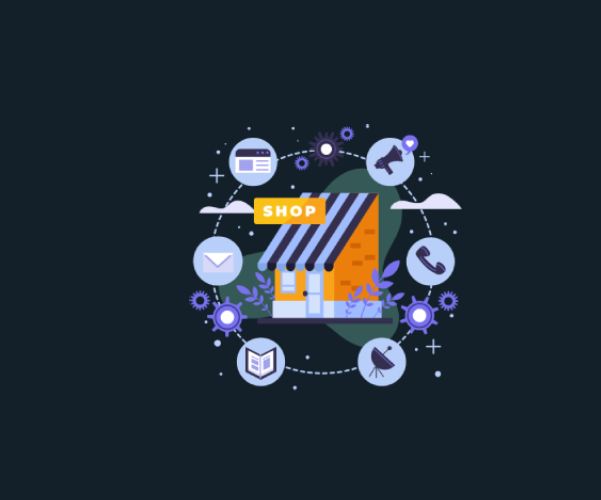
The objective of the ominichannel analysis is to be able to follow the consumer throughout customer experience via different consumption channels. Omnichannel: a change in behavior linked to COVID The year 2020 was affected by the COVID epidemic that we all experienced. In this context, many customers have changed their consumption behaviors: change of brands, change of purchase frequency, change of consumed products and average basket amount… Many are the evolutions and adjustments that have marked consumers during the year. Among these changes, we have also seen a shift in consumption channels, in particular in favor of digital channels and omnichannel. If in the context, this evolution has been more undergone than provoked by the brands, it turns out that a large majority of brands are looking to increase the omnichannel consumption of their customers. Numerous customer knowledge tools allow them to find drivers to encourage multi-channel consumption. Identify the consumer typology First of all, setting up a comparative profile of the different types of consumers (exclusive to stores, exclusive to e-commerce, mixed for example) will allow us to understand the particularities of each group and to identify the drivers to act on. For example, let’s imagine that a product is over-consumed by “store-exclusive” customers, customers that we would like to see become “mixed” customers and therefore also buy on the e-commerce site, we could then make a specific offer on the product in question for any purchase made on the site. On the same mechanism, we could also imagine a special “click and collect” offer for e-commerce customers that we would like to bring to the store (provided, of course, that a store is located near their place of life). Sharpen your strategy with predictive models To go further, predictive models, and in particular the channel score, will allow you to anticipate natural changes in behavior and thus sharpen your strategy to influence consumer behavior. For example, if we set up a purchase intention score on the e-commerce site among “store-only” customers, we will be able to predict the probability that a given customer will buy on the e-commerce site in the coming weeks. Based on this information, we can then differentiate the animation strategy into different groups. For example: How to promote omnichannel with datacadabra? Within datacadabra, many methods are available to work on these issues. In particular, the Describe module will allow you to work on customer profiles and compare the consumption behaviors of different groups. Within the Predict module, the different scoring models will allow us to anticipate future consumer behavior. Our different analysis methods are very simple to implement and allow you to build your action plans with ease. Want to know more? Do not hesitate to contact us or to ask for a demo of datacadabra.
